How to Set Up Massage Space That Feels Luxurious
A massage can be technically excellent and still feel slightly off if the room never settles the body first. The moment someone walks in, the space begins the treatment. Light, temperature, scent, sound, and even the path to the table all shape whether the experience feels merely convenient or deeply restorative. If you are wondering how to set up massage space in a way that feels polished, calming, and genuinely memorable, the answer starts well before the first touch.
For a home session, a vacation villa, a yacht, or a private wellness room, the goal is not to imitate a commercial spa. It is to create a setting that feels quiet, comfortable, and beautifully cared for. The best massage spaces do not look crowded with equipment or styled for show. They feel effortless, soft, and intentionally prepared.
How to Set Up Massage Space for Comfort First
The foundation of any massage setting is physical ease. Before thinking about candles or music, make sure the room supports comfort in practical ways. The massage table should have enough space around it for smooth movement, and the client should be able to get on and off the table without squeezing past furniture or bags.
A room can look lovely and still work poorly if the layout is tight. Leave clear walking space on both sides when possible, and keep any stools, cords, oils, or personal items out of the main path. That sense of openness matters. It helps the body relax because nothing feels cramped or cluttered.
Temperature also deserves more attention than people usually give it. During a massage, the body is still for long stretches, which means even a room that feels fine while standing may feel cool once someone is draped on the table. Aim for a comfortably warm environment, and have an extra blanket available. If the setting is near the water or exposed to ocean breeze, that warmth becomes even more important.
Privacy shapes comfort just as much as layout. Close curtains, soften bright exterior light, and reduce interruptions before the session begins. In a shared house or rental, a simple sign on the door or a quick request for quiet can make the experience feel much more protected and personal.
Start With the Right Room
Not every room should become a massage room. The best choice is usually the one with the least noise, the most privacy, and enough open floor area to breathe. A bedroom often works better than a living room if it is quieter and easier to control, though a larger living space may be ideal if it offers better natural calm.
Look at the room from the client’s point of view. What do they see when they lie down or turn over? A pile of luggage, bright overhead fixtures, and charging cables can pull the mind right back into logistics. A clean corner, soft curtains, and a neatly prepared table signal care. Luxury often comes from what has been removed, not what has been added.
Bathrooms nearby are helpful, but they are not essential if the space itself feels serene. What matters more is that the room allows an uninterrupted flow. If people will be walking through it, opening cabinets, or coming in to grab a phone charger, choose another area.
Natural beauty helps, but control matters more
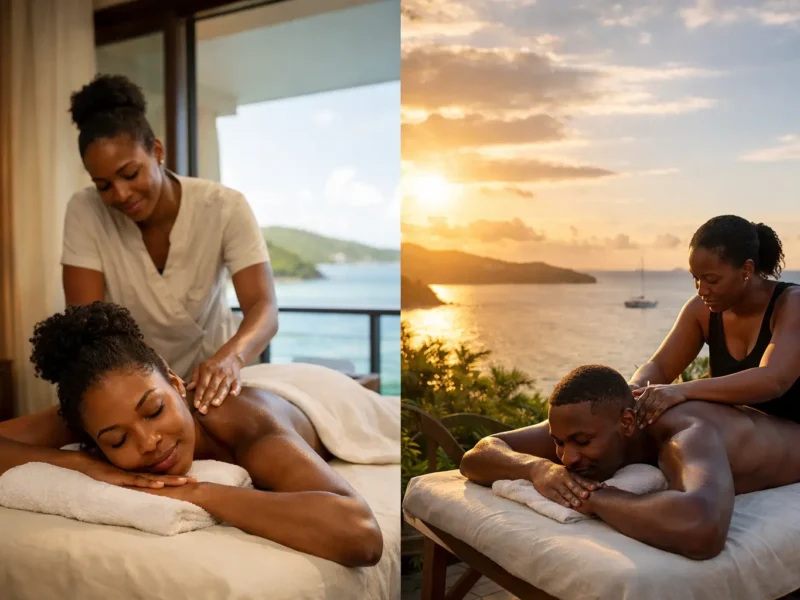
A room with a beautiful ocean view sounds perfect, and sometimes it is. But if the light is glaring, the heat is high, or outside noise drifts in constantly, that view may work against the treatment. A slightly simpler room with better shade, quieter acoustics, and steady temperature can create a far more soothing result.
Lighting Should Soothe, Not Perform
Lighting is one of the fastest ways to shift a room from ordinary to restorative. Harsh overhead brightness keeps the nervous system alert. Very dim lighting can feel lovely, but if it is too dark, the space can become impractical or unsafe. The sweet spot is soft, warm, and flattering.
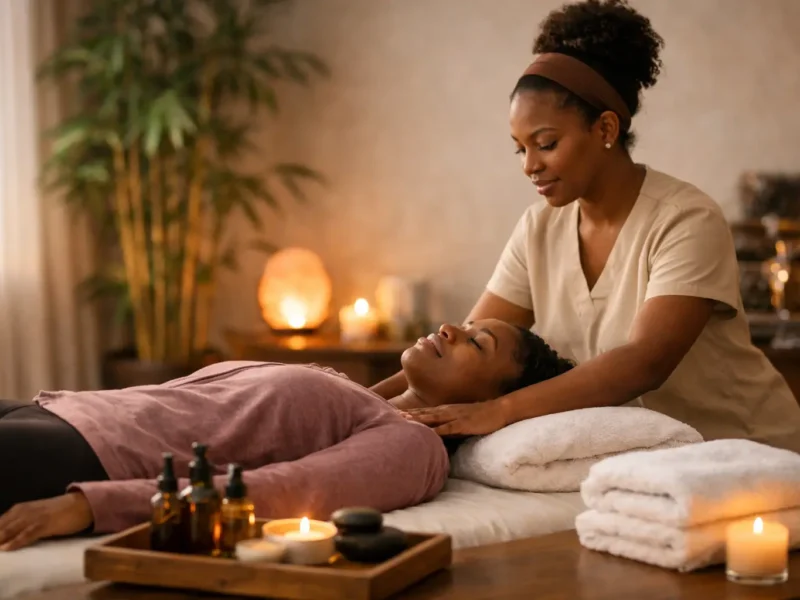
Lamps are usually better than ceiling lights. If overhead lighting is the only option, dim it if possible or balance it with softer side lighting. Candles can add warmth, though they should never feel crowded, overly scented, or fussy. A massage setting should feel calm, not staged.
Natural light can be beautiful for daytime treatments, especially in a villa or waterfront home, but it should be filtered. Sheer curtains or partially closed drapes can preserve the glow while removing the intensity. The body relaxes more easily when the eyes are not working to adjust.
Sound and Scent Need Restraint
People often overdo atmosphere. A massage space does not need to smell strongly of lavender or sound like a waterfall soundtrack turned up to fill every silence. The most elegant environments are subtle.
For sound, choose gentle music that supports the room rather than dominating it. Instrumental tracks, soft ambient music, and low-volume nature sounds can all work well. What matters is consistency. Sudden volume changes, ads, or a speaker that crackles instantly break the sense of care.
Scent should be light and clean. Essential oils can be beautiful, but they are not right for everyone. Some guests are sensitive to fragrance, especially in enclosed spaces. If scent is part of the atmosphere, keep it minimal and avoid competing smells from room sprays, cleaning products, or heavily perfumed linens. Fresh air and crisp cleanliness often feel more luxurious than a strong aroma.
A note on beaches and outdoor spaces
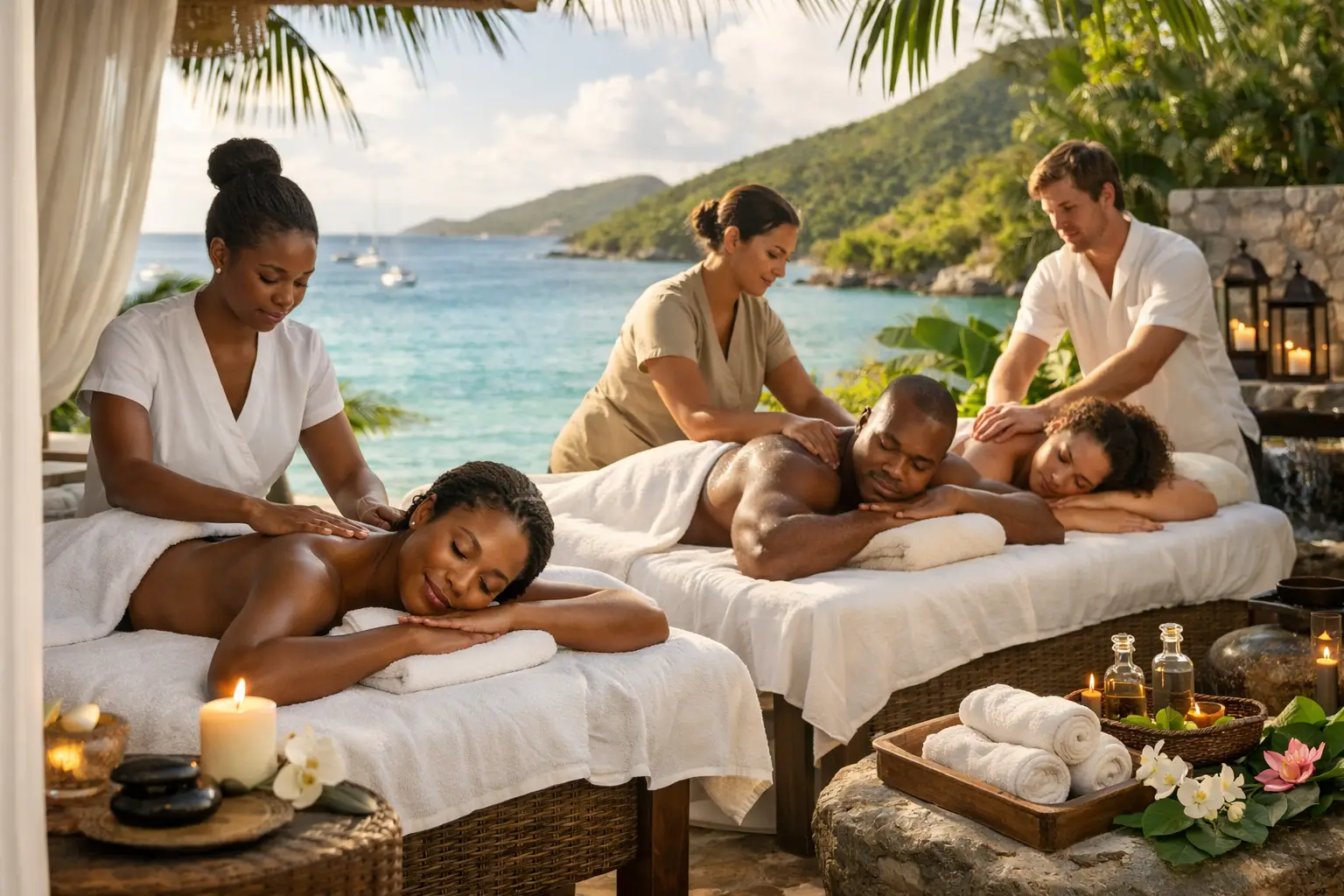
An outdoor massage can feel unforgettable, but only when conditions cooperate. Wind, direct sun, insects, shifting temperatures, and lack of privacy can quickly turn a dream setting into a distracted one. If you are preparing an open-air space, shade and stability come first. Soft towels and ocean views are wonderful, but the body will not fully unwind if it is bracing against heat or exposure.
The Table Area Should Feel Intentionally Prepared
The table is the center of the experience, and every detail around it should communicate comfort. Fresh linens are essential. They should feel soft, clean, and neatly placed, with no wrinkles, dampness, or strong detergent scent. Bolsters, face cradle covers, and blankets should look coordinated and feel inviting.
Keep supplies close, but not visually busy. Oils, towels, and tools should be accessible without creating a cluttered perimeter around the table. A single tray or neatly arranged side surface works better than several scattered items. This is one of the easiest ways to make a space feel elevated.
If the massage is taking place in a temporary setting, such as a vacation rental or yacht, small details matter even more. A folded towel, a glass of water nearby, and a clear place for jewelry or personal belongings can make the entire session feel more thoughtful.
How to Set Up Massage Space for a Luxury Feel
A luxurious massage space is not about spending heavily. It is about removing friction. The room should feel easy to enter, easy to settle into, and easy to trust. That means no visual chaos, no awkward rearranging at the last minute, and no sense that the treatment is competing with the rest of the environment.
Textures help. Soft cotton, light throws, and natural materials tend to create a calmer mood than shiny or synthetic finishes. Color also plays a role. Neutrals, sandy tones, muted greens, and soft whites usually support relaxation better than busy patterns or sharp contrasts.
Hospitality makes the difference between a service and an experience. Offering water before or after the massage, lowering the room noise in advance, and making sure the client does not need to ask for basic comforts all contribute to that sense of being cared for. In premium settings, the greatest luxury is often anticipation.
There is also value in adapting the setup to the occasion. A honeymoon couple may want a more romantic atmosphere, while a solo traveler recovering from a long flight may prefer simplicity, quiet, and warmth. The best massage spaces are not formulaic. They respond to the person using them.
What to Avoid When Preparing the Space
The most common mistake is trying too hard. Too many candles, too much scent, too much decor, or too many wellness extras can make the room feel busy rather than peaceful. Massage works best in an environment that feels grounded.
Another issue is ignoring the practical side of relaxation. If the room is beautiful but too cold, if the music is soothing but there is nowhere to place clothes neatly, or if the table is centered under a glaring light, the body notices. Sensory comfort is holistic. Small points of discomfort add up.
It also helps to avoid last-minute setup in front of the client whenever possible. A room that is already prepared creates confidence. In high-touch wellness experiences, readiness itself is part of the care.
For guests staying in St. Thomas or on Water Island, this matters even more because the setting is already part of the escape. A massage space should honor that feeling, not interrupt it with clutter or improvisation.
A truly calming massage room does not need to be elaborate. It needs warmth, privacy, softness, and intention. When the space is prepared with care, the body feels it almost immediately – and that is where the journey to serenity really begins.