Where to Snorkel With Turtles in St. Thomas
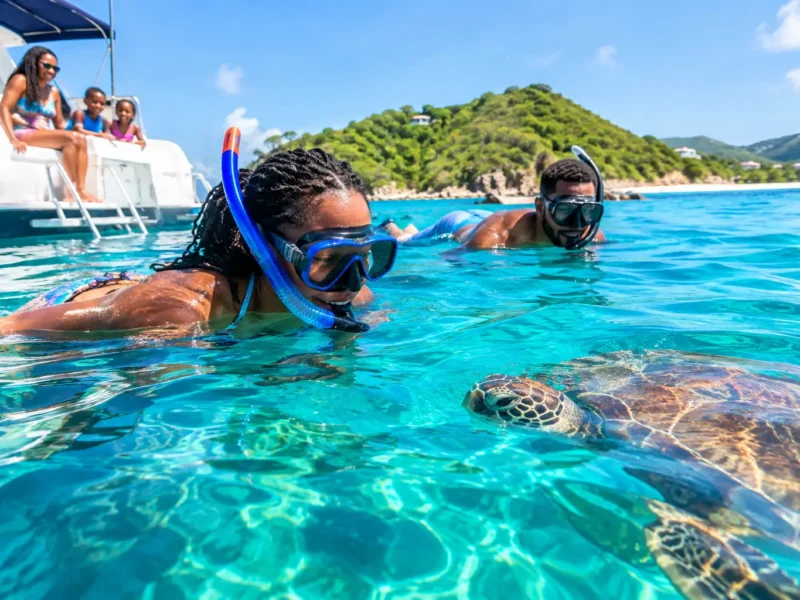
A sea turtle rises from the blue with no need to impress anyone. It takes one unhurried breath, slips beneath the surface again, and suddenly the whole day feels quieter. If you are deciding where to snorkel with turtles, St. Thomas and nearby St. John offer something rarer than a quick sighting: the chance to float gently alongside these ancient island residents in water clear enough to make time feel suspended.
The secret is not chasing turtles. It is choosing the right bay, arriving with patience, and giving the reef enough calm for its natural rhythm to appear. Around the U.S. Virgin Islands, turtles often feed in seagrass meadows close to shore, then drift toward coral structure to rest or travel. Some days they are immediately visible. Other days, the memorable part is the slow search itself: sunlight on the water, a bright parrotfish in the reef, the hush that settles in once you put your face below the surface.
Where to snorkel with turtles near St. Thomas
Turtle Cove at Buck Island
For a true turtle-focused outing from St. Thomas, Turtle Cove near Buck Island is one of the most rewarding places to be on the water. This small island sits offshore, so it is generally reached by boat rather than from a beach. Its protected-feeling cove, seagrass beds, and reef edges create the kind of habitat green sea turtles return to again and again.
The boat ride is part of the experience. St. Thomas softens behind you, the water shifts from deep blue to luminous turquoise, and then the island comes into view like a quiet green guardian. Once anchored, you may see turtles grazing below before you ever put on a mask. They tend to move with lovely, deliberate purpose, often unconcerned by respectful swimmers at a distance.
Conditions matter here. A private or small-group trip can make all the difference because the captain can choose the calmer side of the island, read the wind, and avoid turning the moment into a crowded swim. ZenWaves Massage & Adventures designs snorkel days around that feeling of ease – less rushing, more room to be present with the sea.
Christmas Cove and the waters around Great St. James
Christmas Cove is another beloved St. Thomas boat-access destination, especially for travelers who want a relaxed day that blends snorkeling, swimming, and the simple pleasure of being held by warm Caribbean water. Turtles are often seen in the broader area, particularly where seagrass and reef meet, though wildlife never follows a schedule.
This is a wonderful choice for couples, families, and groups with different comfort levels in the water. Stronger snorkelers can spend time exploring reef features, while first-timers can stay nearer the boat and get comfortable with their gear. The best turtle encounter is not always the longest swim from shore. Sometimes it happens when everyone has settled in, moving quietly and looking down rather than racing ahead.
Secret Harbour and the east-end bays
If you prefer snorkeling from the beach, the sheltered bays on St. Thomas’s east end can offer a gentler introduction. Secret Harbour is known for clear water and a reef that is accessible without a long boat ride. Turtle sightings can happen, particularly along seagrass areas and the edges of the bay, but they are less predictable than at dedicated offshore habitats.
That trade-off can be exactly right for a mellow morning. You can enter at your own pace, take breaks on the sand, and spend as much time floating as snorkeling. For nervous swimmers or families with younger children, a calm beach entry may be more valuable than pursuing the most remote reef.
St. John bays worth the crossing
St. John has a quieter, more untouched feeling that many turtle seekers fall in love with. Its protected bays, green hillsides, and long stretches of undeveloped shoreline make the island feel like an invitation to slow down.
Maho Bay
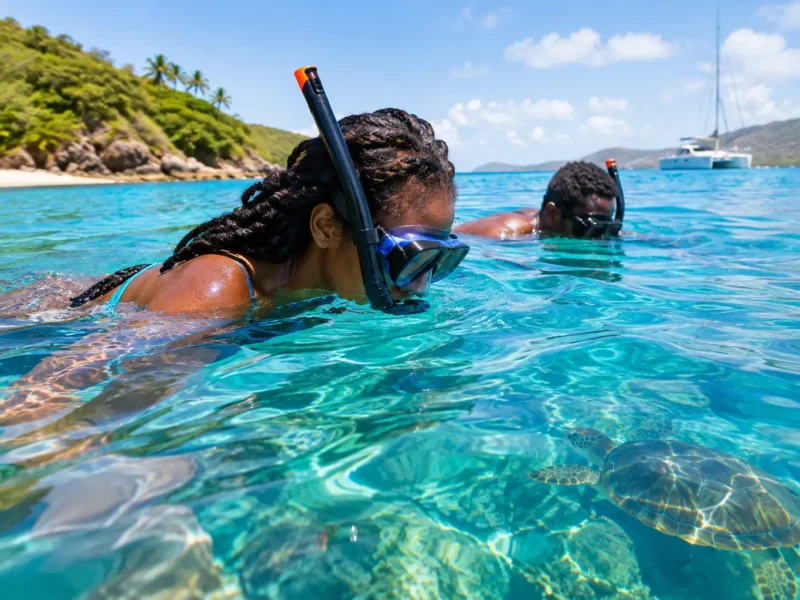
Maho Bay is among the most dependable places to spot green sea turtles from shore in the Virgin Islands. The bay’s broad seagrass meadow is a natural feeding ground, and turtles are often seen close enough to shore that even newer snorkelers may have an opportunity to observe one.
Do not expect a coral garden directly beneath every stroke. Maho’s magic is its meadow. Look for the turtle-shaped silhouette below, the gentle movement of a flipper, or the unmistakable head rising at the surface for air. The bay is often calm, but morning usually brings the clearest, least disturbed conditions.
Because Maho is so well known, your approach matters. Stay calm, keep your fins from stirring the seagrass, and let a turtle choose its own direction. A quiet encounter, even one that lasts only thirty seconds, is far more special than following an animal until it changes course.
Francis Bay
Just beyond Maho, Francis Bay offers another serene place to look for turtles, rays, and reef fish. The atmosphere feels softer here, with a long beach, lush shoreline, and a slower pace that suits travelers who want to make snorkeling part of a full day outdoors.
Turtles may feed in the shallows, while the rocky edges of the bay can reveal smaller marine life. It is an especially lovely place for anyone who wants a restorative rhythm: snorkel a little, rest in the shade, return to the water when the light changes. Bring water, sun protection, and enough time that you do not have to turn a wildlife moment into a race.
Waterlemon Cay and Leinster Bay
For confident snorkelers, the waters near Waterlemon Cay can be extraordinary. The scenery alone is worth the effort: clear channels, reef life, and views of St. John’s rugged coastline. Turtles can appear here, but this is not the easiest choice for a first-time snorkeler because currents and distance can vary.
Think of Waterlemon as a reef adventure with possible turtle magic, rather than a guaranteed turtle stop. Check conditions carefully, go with someone who knows the area, and do not push past your comfort level just to reach the cay. The Caribbean rewards good judgment.
The gentle way to share the water
Sea turtles are protected wildlife, not underwater photo props. Keeping a respectful distance protects them and often gives you a better view, since relaxed turtles continue feeding and moving naturally. Never touch, feed, block, or swim directly above a turtle. Avoid sudden splashing, and do not surround one with your group.
A few small choices also protect the reef that supports them. Use reef-conscious sun protection when possible, cover up with a rash guard to reduce what washes into the water, and make sure your fins stay clear of coral and seagrass. If you are using a phone or camera, take one quick photo from a distance, then put it down. The real memory is usually the one you experienced without a screen between you and the sea.
Turtle sightings are never guaranteed, and that is part of their grace. Weather, water clarity, wind, boat traffic, and the turtles’ own feeding patterns all play a role. A thoughtful local guide can improve your odds by choosing the right conditions and habitat, but the animals remain wonderfully, appropriately wild.
Choosing the right turtle snorkel experience
The best location depends on the kind of day you want. Choose Turtle Cove or Christmas Cove if you want the freedom and privacy of a boat day, with access to offshore water and multiple places to explore. Choose Maho Bay if a shore-entry swim and dependable seagrass habitat sound most appealing. Choose an east-end St. Thomas bay if your group needs calm water, easy access, and a relaxed pace.
For honeymooners, a private charter can create space for the kind of quiet connection that is hard to find on a busy beach. Families may prefer a sheltered bay where everyone can move at their own speed. Experienced snorkelers might pair a turtle stop with a reef route around St. John. There is no single perfect answer – only the setting that lets your group feel safe, unhurried, and awake to what the water offers.
Go early when you can. Mornings often bring lighter winds, clearer visibility, and a peacefulness that makes the first turtle sighting feel almost secret. Then linger a moment after it disappears into the blue. The island has a way of giving you one more shimmer of light, one more breath of salt air, one more reason to carry the sea home with you.