How to Snorkel Turtle Reefs With Calm Confidence
A turtle reef does not announce itself with a spotlight. It reveals itself in quiet flashes: a shadow lifting from a seagrass bed, a patterned shell passing over coral, a slow breath breaking the surface nearby. Learning how to snorkel turtle reefs is less about chasing a sighting and more about moving gently enough to be welcomed into the reef’s rhythm.
For many guests in St. Thomas and St. John, floating near a sea turtle becomes the moment they carry home long after the salt has left their hair. The secret is not speed, bravery, or a crowded patch of water. It is calm preparation, an unhurried entry, and the respect to let wild animals remain wild.
Begin Before You Enter the Water
The most peaceful snorkels begin on the boat or beach, before your mask ever touches the sea. Take a few minutes to adjust your mask, snorkel, and fins while you are still dry. A mask that seals comfortably around your face should stay in place with a gentle inhale, without being tightened to the point of discomfort. If your hair is caught beneath the skirt, fix it now. A small leak can become a big distraction once you are floating above a living reef.
Choose fins that feel secure but do not pinch. Your feet should be able to point naturally, and your ankles should not feel strained. If you are new to snorkeling, practice placing your face in the water and breathing slowly through the snorkel in a calm, shallow area first. That little rehearsal changes everything. Your body learns that the water is a place to soften, not fight.
A well-fitting flotation belt or snorkel vest can be a beautiful confidence tool, especially for anyone who has not been in open water recently. It lets you rest on the surface without kicking constantly, protecting your energy and helping you avoid accidental contact with coral. There is no prize for snorkeling without support. The goal is presence.
Check Conditions, Not Just the Forecast
Clear skies do not always mean easy water. Wind direction, swell, current, and visibility can shift from one shoreline to the next. A protected cove may feel glassy while an exposed point is choppy enough to make even confident swimmers tired.
Ask a local guide where conditions are most comfortable that day and be honest about your swim level. The best turtle reef is not necessarily the most famous one. It is the one where you can float safely, breathe easily, and pay attention to what is around you. On a private outing, that flexibility is part of the luxury: the day can follow the water rather than a rigid itinerary.
How to Snorkel Turtle Reefs Without Disturbing Them
Sea turtles often feed in seagrass meadows near reefs, rest beneath ledges, or cruise along coral edges. You may see one in very shallow water, but that does not make it approachable. Give every turtle room to choose its own path.
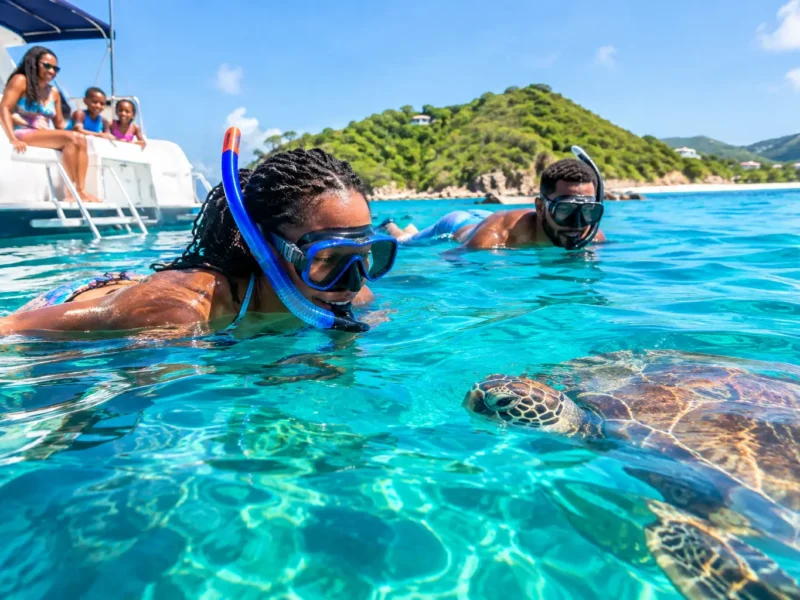
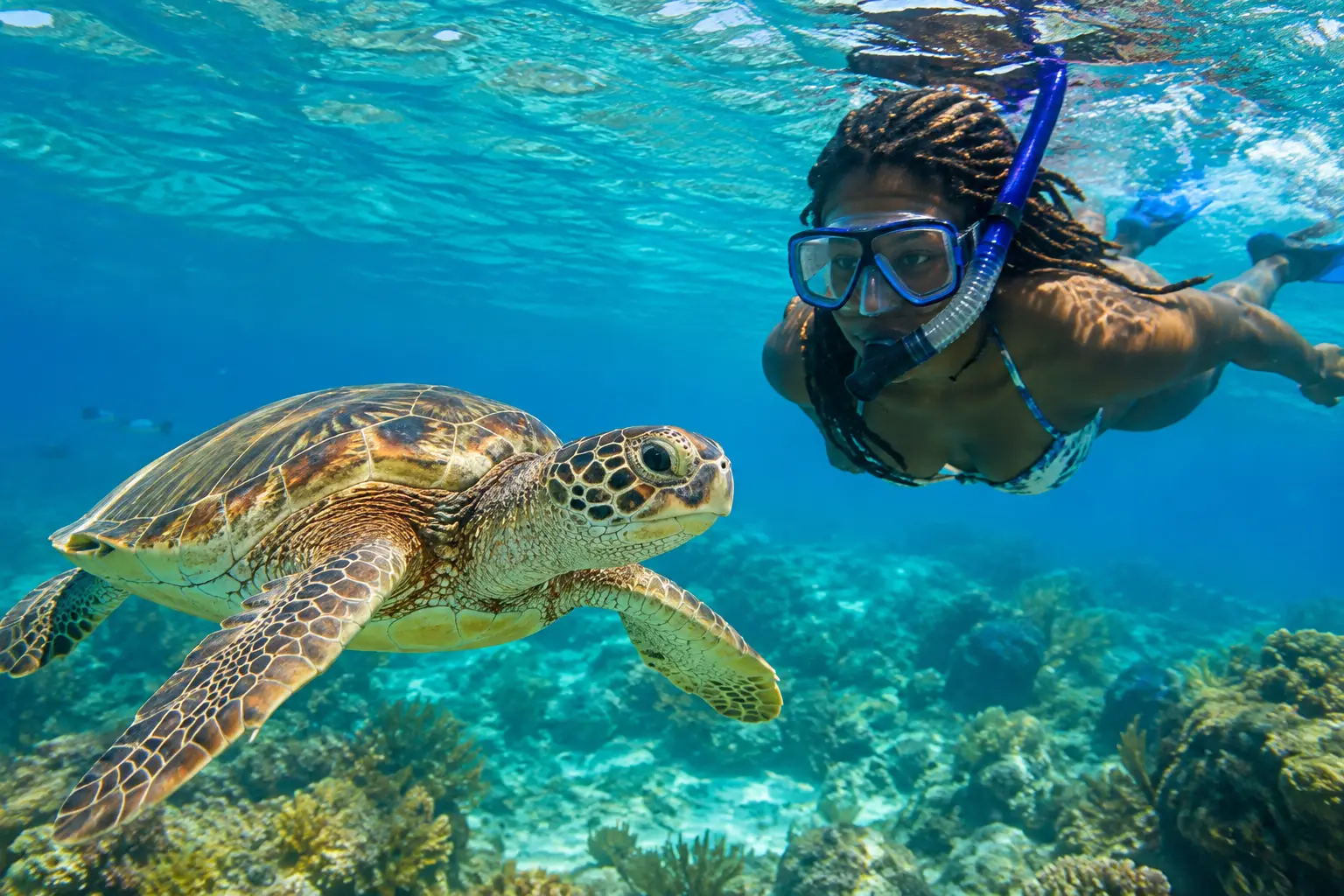
The simplest rule is to observe from a respectful distance, ideally at least 10 feet away, and never position yourself in front of a turtle. Do not swim over it, corner it against the reef, or surround it with your group. A turtle that changes direction repeatedly, speeds up, dives away, or stops feeding is telling you it needs more space.
Keep your hands to yourself, even if the turtle glides close enough to touch. Touching can remove protective coatings from its shell, startle the animal, and teach it to associate people with stress. The same care belongs to the reef. Never stand on coral, hold onto it for balance, or brush it with your fins. Coral may look like stone from above, but it is a living community that grows slowly and can be damaged in seconds.
Instead, become a quiet visitor. Float horizontally, keep your kicks small and measured, and let the turtle set the pace. If it swims away, resist the urge to follow. Look around. A patient pause often reveals more: a ray settling into the sand, blue tangs grazing along the reef, or another turtle rising from the grass behind you.
Let Your Breathing Set the Pace
The fastest way to feel overwhelmed in the water is to kick hard and breathe fast. The remedy is wonderfully simple: slow down.
Breathe in steadily through your snorkel, then let the exhale leave your body long and easy. Think of your breath as a metronome for your movement. With each slow breath, your shoulders relax, your legs become quieter, and the underwater world comes into focus.
If your mask fogs, you swallow a little water, or you feel a flicker of nerves, lift your head above the surface and reset. There is no need to push through discomfort. Hold onto a float if one is available, signal your guide, and take a moment. Snorkeling is not a performance. It is a journey to serenity, one breath at a time.
For couples, families, and groups, this is also where a thoughtful guide makes the experience feel more personal. Rather than racing everyone toward a single sighting, a good leader watches the group, points out marine life without crowding it, and creates space for each person to find their own wonder.
Read the Reef Like a Local
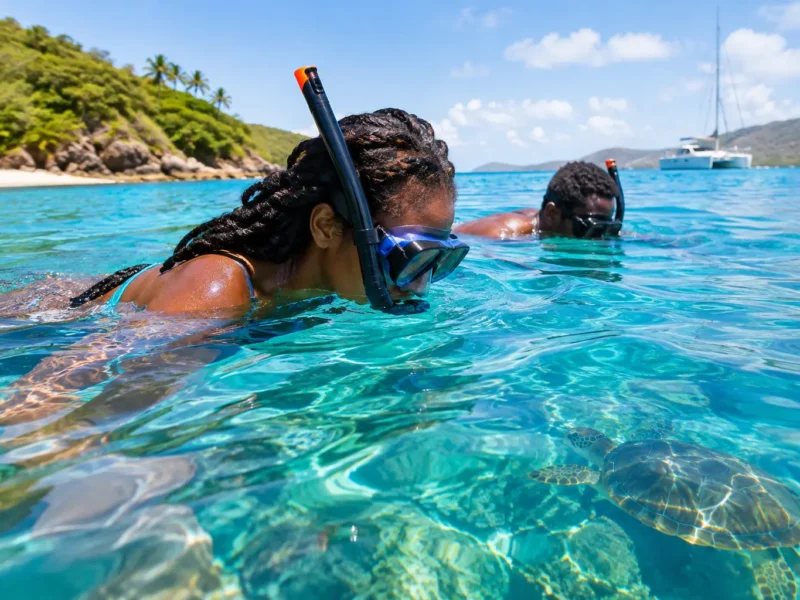
Turtles are not always where you expect them. In the Virgin Islands, seagrass is often as important as coral when you are hoping for a turtle encounter. Green sea turtles commonly graze on seagrass, while hawksbills may forage around reef structure. Scan slowly across sandy channels, grass beds, coral heads, and the blue water beyond the reef edge.
At first, a turtle can look like a rounded rock resting on the bottom. Look for a shell pattern, a flipper moving through the grass, or a head lifting to breathe. Once you spot one, avoid shouting or splashing to get everyone’s attention. A gentle point and a calm signal are enough.
Early morning can bring softer light and quieter water, while late afternoon may offer a warm, golden glow near the surface. But timing depends on weather, tide, and location. Wildlife has no appointment book. This is part of the gift. A turtle sighting should feel like an invitation, not something guaranteed on demand.
Use Sun-Safe Choices That Respect the Water
What you bring into the sea matters. Wear a rash guard or long-sleeve swim shirt when possible, along with a hat and shade breaks on the boat. Physical coverage can reduce how much sunscreen you need. When sunscreen is necessary, choose a reef-conscious option and apply it well before entering the water.
Leave nothing behind: no snack wrappers, drink lids, or loose plastic. Secure your camera, but do not let filming pull you too close to wildlife. A few calm seconds of memory are often more vivid than an entire video shot while kicking after a turtle.
Know When to Turn Back
Confident snorkeling includes knowing when conditions are no longer right. If the current begins carrying you away from your group, visibility drops, a storm builds, or fatigue creeps in, signal early. Turn toward the boat or shore before you are exhausted.
This matters especially around reef edges, where water can deepen quickly and currents may feel stronger than they appear from the surface. Stay within the area your guide has identified, keep track of your exit point, and snorkel with a buddy. Even seasoned swimmers benefit from a shared plan.
At ZenWaves Massage & Adventures, the intention behind a sea-turtle snorkel is never to collect another checkmark. It is to find that rare stillness when the island grows quiet, your breath settles, and a wild creature passes through clear Caribbean water on its own terms.
When you climb back aboard or step onto the sand, take a moment before reaching for your phone. Feel the sun on your shoulders, notice the hush that follows the water, and let the encounter remain exactly what it was: a small, extraordinary meeting with a world that asks only for your care.