How to Plan Fire Entertainment for Your Island Event
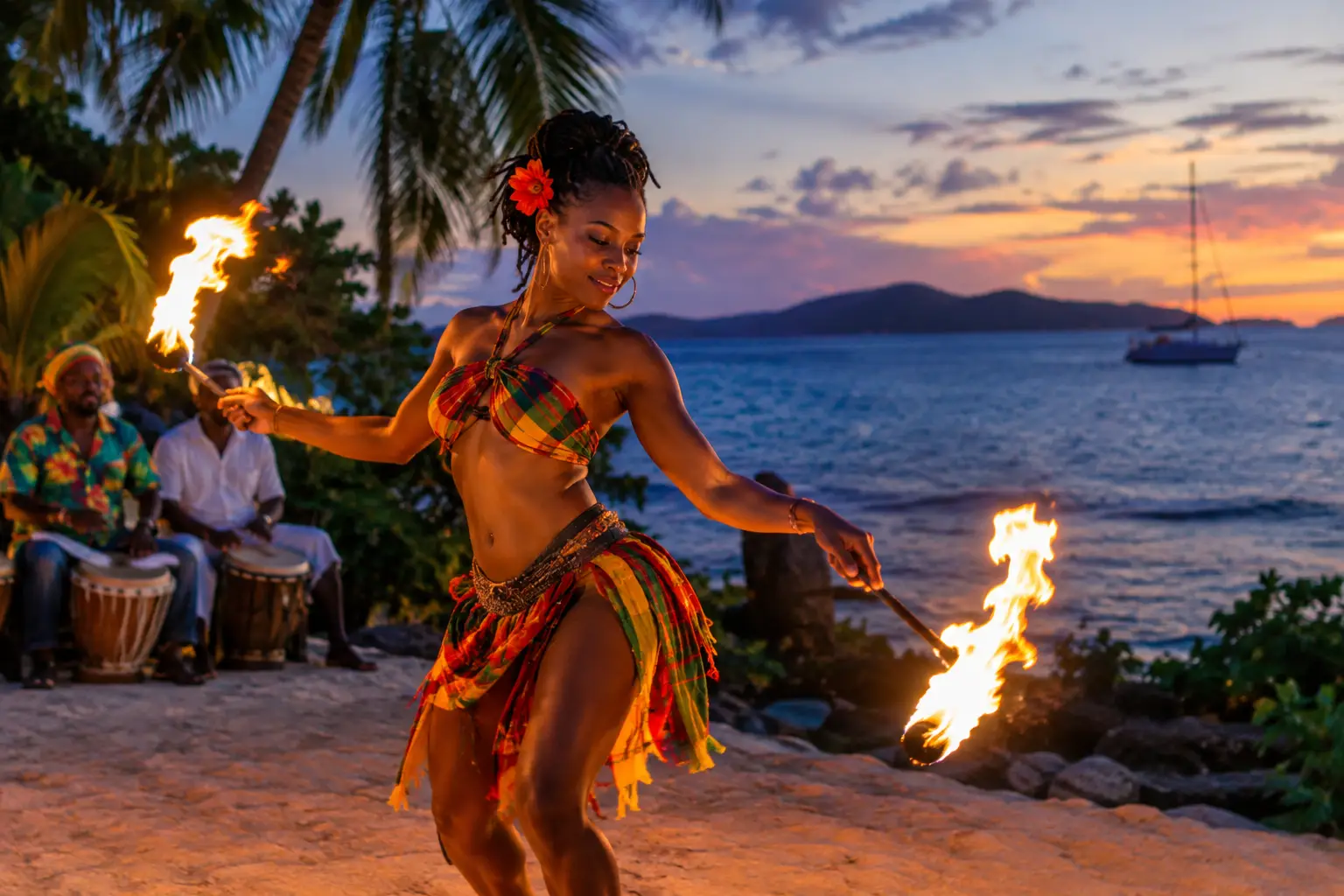
A fire performer should never feel like background entertainment. At the right moment, the first spark quiets the room, the Caribbean night seems to widen, and everyone remembers exactly where they were. That is the heart of how to plan fire entertainment: creating one breathtaking pause in an evening that already feels personal, joyful, and beautifully yours.
Whether you are hosting a barefoot wedding reception, an intimate villa celebration, a full-moon beach party, or a gathering aboard a charter, fire performance works best when it is woven into the rhythm of the night. It is not simply about adding flames. It is about building anticipation, protecting the ease of your guests, and choosing a setting where the show can truly glow.
Start with the feeling you want guests to carry home
Before choosing props, music, or a performance length, picture the moment after the show. Do you want your guests to feel swept into something wild and celebratory? Is the mood romantic and slow, with flames reflecting off the water after dinner? Or are you planning a high-energy birthday, reunion, or wedding after-party that needs one bold turning point?
This choice guides nearly everything else. A sunset ceremony may call for a short, elegant performance that begins as the sky deepens from gold to violet. A lively beach gathering may suit a more rhythmic set with multiple performers, audience energy, and a grand finale. For a private villa dinner, a close-up solo presentation can feel more exclusive than a long production.
The most memorable events have a clear emotional arc. Guests arrive, settle into the setting, connect over food and conversation, and then the fire show lifts the night into something unforgettable. Give the performance a purpose beyond filling time.
How to plan fire entertainment around your event timeline
Fire belongs after daylight has softened, but before the event has begun to drift. In the Virgin Islands, that often means planning around sunset rather than relying on a fixed clock time. The exact timing changes through the year, and weather can move the mood of an outdoor evening quickly.
For weddings, the show often lands beautifully after dinner and toasts, when guests are ready for a shared experience but before dancing takes over. It can also be a striking entrance into the reception, especially if the ceremony has ended near sunset. For private parties, plan it after everyone has arrived and had time to relax, rather than presenting it while guests are still finding drinks, greeting one another, or settling children.
A performance usually feels strongest when it has room to breathe. Avoid squeezing it between two major moments, such as speeches and cake cutting. Leave a few unhurried minutes beforehand to gather guests naturally, then let the applause carry into the next part of the evening.
Music matters here, too. Decide whether the performer will bring a curated soundtrack, work with your DJ, or perform to live drumming. The music should support the atmosphere rather than overpower the setting. On a quiet waterfront, the hush between songs can be as powerful as the beat.
Choose a venue with a real performance zone
A beautiful view is only one part of a good fire-show setting. The performance needs an open, level area with enough separation from guests, tables, fabrics, landscaping, and any structure overhead. A beach can be ideal, but shifting sand, wind direction, tide, nearby vegetation, and access all need to be considered. A villa lawn or terrace may be perfect if the space is generous and the surface is appropriate.
Think about the audience experience as carefully as the performer’s space. Guests should be able to see clearly without crowding forward. Arrange chairs in a gentle arc for a seated reception, or create a defined viewing line for a cocktail-style party. If people have to crane around a bar, speaker, or palm tree, the magic gets lost.
Yacht and boat events require particularly thoughtful planning. Space is limited, surfaces can move, and wind changes quickly on the water. In many cases, it is more practical and safer to arrange a shoreline performance during a beach stop or after docking than to expect a full fire presentation aboard. The right choice depends on the vessel, captain’s rules, weather, and available space.
Treat safety as part of the luxury
The finest events feel effortless because the careful details are handled quietly. Fire entertainment is no exception. Work with experienced professionals who understand fuel handling, prop control, wind conditions, fire boundaries, and the practical needs of the venue.
Your performer should have a clear plan for where they will prepare, where fuel and equipment will be kept, how the performance area will be secured, and what happens if conditions change. Hosts and planners should share venue details early, including access routes, ground conditions, nearby décor, guest count, and whether children will be attending.
A few thoughtful choices protect both the performance and the mood:
- Keep the viewing area clearly separate from the performance zone.
- Move loose linens, low-hanging décor, and flammable props away from the show area.
- Let the performer make the final call if wind or rain makes the conditions unsuitable.
- Tell guests in advance when the show will begin, especially parents who may want to stand with young children.
This is not about making the evening feel restricted. It is what allows everyone to relax into the experience. When the boundaries are clear, guests can be fully present for the heat, movement, music, and awe.
Match the performance to the people in the room
Fire entertainment can be sensual, celebratory, dramatic, playful, or deeply atmospheric. The best fit depends on your guests and your occasion. A honeymoon celebration or small destination wedding may call for graceful fire fans, flowing movement, and a softer musical palette. A milestone birthday on the beach may invite faster pacing, fire poi, staff work, and a finale designed for cheers.
If children are attending, let the performer know their ages and the shape of the event. A family-friendly show can still feel spectacular, but it may favor a shorter running time, more visible safety boundaries, and performance choices that are exciting without becoming overwhelming.
Cultural respect matters as well. The Caribbean is rich with rhythm, movement, and celebration, but an authentic event should never feel like a costume party built from borrowed imagery. Choose performers whose style feels natural to the setting and allow the island itself to provide the drama: the salt air, the warm dark, the sound of water nearby, and the stars above.
Plan the practical details before the celebration begins
A smooth event starts with a simple conversation well before the date. Share your location, guest count, event schedule, desired mood, and any special moment you are hoping to highlight. If you are planning a surprise, be clear about who will help gather guests and cue the music without giving the moment away.
It also helps to discuss power access for sound, parking or loading access, venue rules, and a weather backup. Not every evening needs a complicated contingency plan, but outdoor events deserve one. A covered area might protect dinner, yet it may not be suitable for fire performance. Sometimes the wiser option is to shift the show earlier, move it to a more open part of the property, or make a weather call with the performer before guests arrive.
For a destination wedding or multi-day celebration, consider saving the fire show for the night when your group is most settled. The first evening is often full of travel delays and scattered arrivals. By the second or third night, guests have exhaled. They are ready to take off their shoes, step into the sand, and share a moment that feels far beyond an itinerary.
At ZenWaves Massage & Adventures, that is the kind of island memory we love to help create: not a performance dropped into a schedule, but an invitation to be fully there.
When you plan with care, fire entertainment becomes more than a beautiful photo opportunity. It becomes the moment guests look at one another in the flickering light and realize this night, in this place, will stay with them long after the last flame fades.